
Developing a Sustainable Bronchoscopy Program in Ethiopia: A Model for Capacity Building in Low-Resource Settings
Strengthening Pulmonary Care Through Education and Partnership
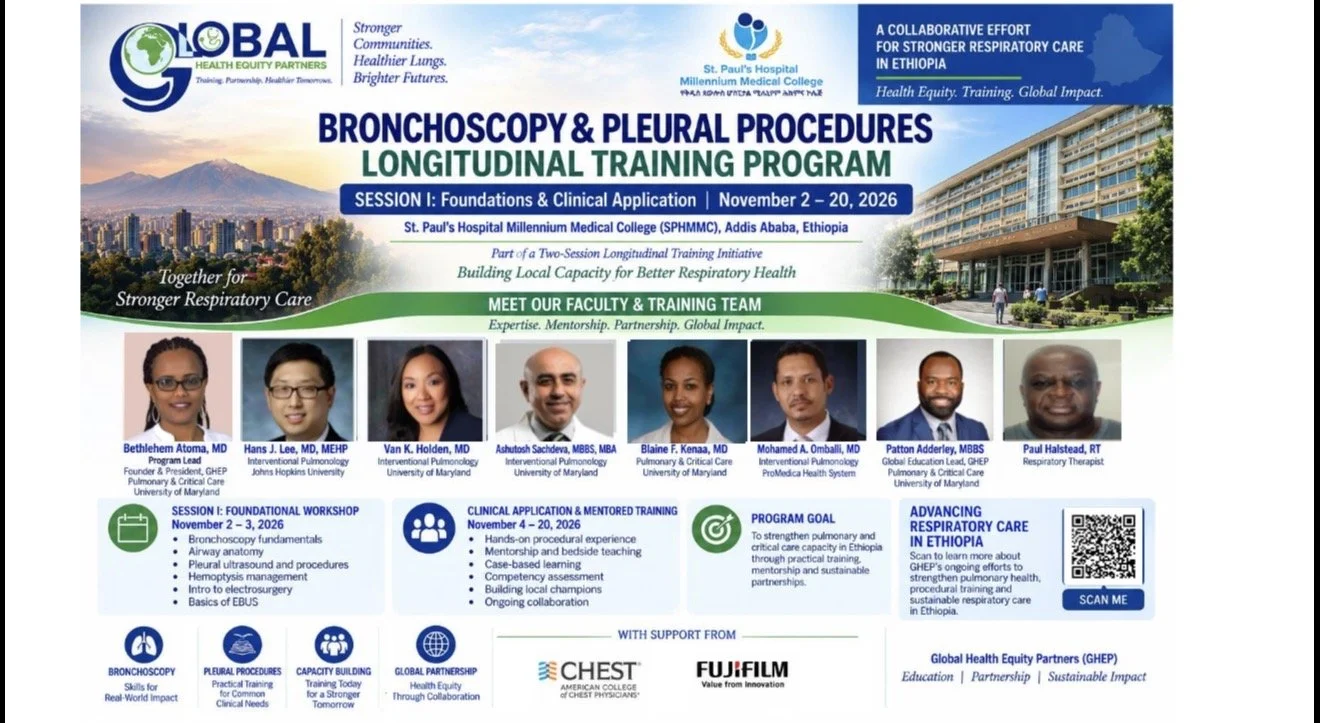
Global Health Equity Partners (GHEP), in collaboration with St. Paul's Hospital Millennium Medical College (SPHMMC) and international academic partners, is launching a comprehensive educational initiative to strengthen bronchoscopy, endobronchial ultrasound (EBUS), and pleural disease management in Ethiopia.
This program is designed to build sustainable local expertise through a combination of evidence-based lectures, simulation-based education, and supervised clinical training led by volunteer faculty from leading academic medical centers in the United States and Ethiopia.
Why This Program Matters
Respiratory diseases—including lung cancer, tuberculosis, pleural diseases, malignancy, and other complex pulmonary conditions continue to place a significant burden on Ethiopia's healthcare system. Many patients require advanced diagnostic procedures such as bronchoscopy and EBUS, yet access to these services remains limited.
Expanding local expertise and procedural capacity will improve access to timely diagnosis and treatment while strengthening pulmonary training for future generations of physicians.
Program Goals
The program aims to:
Develop physician competency in bronchoscopy, EBUS, and pleural procedures.
Improve patient safety and procedural quality through standardized education.
Expand access to minimally invasive pulmonary diagnostics.
Establish a sustainable train-the-trainer model to support long-term institutional growth.
Strengthen collaboration between Ethiopian and international pulmonary specialists.
Educational Activities
Participants will receive comprehensive training through:
Evidence-based lectures
Interactive case discussions
Bronchoscopy simulation
Airway anatomy and bronchoscopic navigation
Bronchoalveolar lavage (BAL)
Endobronchial and transbronchial biopsy techniques
Endobronchial Ultrasound (EBUS) and EBUS-guided transbronchial needle aspiration (EBUS-TBNA)
Pleural ultrasound
Thoracentesis
Small-bore chest tube placement
Pleural disease management
Introduction to medical pleuroscopy
Airway interventions
Supervised bedside procedures
Competency assessments and individualized feedback
Advanced Clinical Training
Approximately 20–30 physicians will participate in the educational curriculum. Prior to the program, 4–6 experienced physicians from pulmonary and critical care programs across Ethiopia will be selected for an advanced hands-on clinical training track. These physicians will receive intensive supervised procedural training and are expected to become future educators within their institutions, helping expand access to bronchoscopy and pleural disease services throughout the country.
International Faculty
The educational program is led by Global Health Equity Partners (GHEP) in partnership with St. Paul's Hospital Millennium Medical College (SPHMMC). Volunteer faculty include interventional pulmonologists, pulmonologists, critical care physicians, respiratory therapists, nurses and educators from leading academic institutions in the United States, and other countries, alongside Ethiopian faculty committed to advancing pulmonary medicine.
Sustainability
This initiative is designed to create lasting impact beyond a single training event. Educational equipment and training resources will remain at SPHMMC to support continued physician education, clinical services, and future training programs. Through ongoing mentorship, institutional collaboration, and a train-the-trainer approach, the program seeks to establish a sustainable center of excellence for bronchoscopy, EBUS, and pleural disease management in Ethiopia.
Our Vision
This training program represents the foundation of a long-term vision to establish Ethiopia's first Interventional Pulmonology (IP) training pathway. Through sustained education, international mentorship, and institutional partnerships, GHEP and SPHMMC aim to develop a new generation of Ethiopian physician leaders capable of providing advanced diagnostic and therapeutic pulmonary care. Our long-term goal is to train Ethiopia's first locally based interventional pulmonologists, who will, in turn, educate future trainees and expand access to life-saving procedures across the country.
Help Build the Future of Interventional Pulmonology in Ethiopia
Your support can help transform pulmonary care for generations to come. Every contribution advances physician education, expands access to life-saving technology, and brings Ethiopia closer to establishing its first sustainable Interventional Pulmonology program.
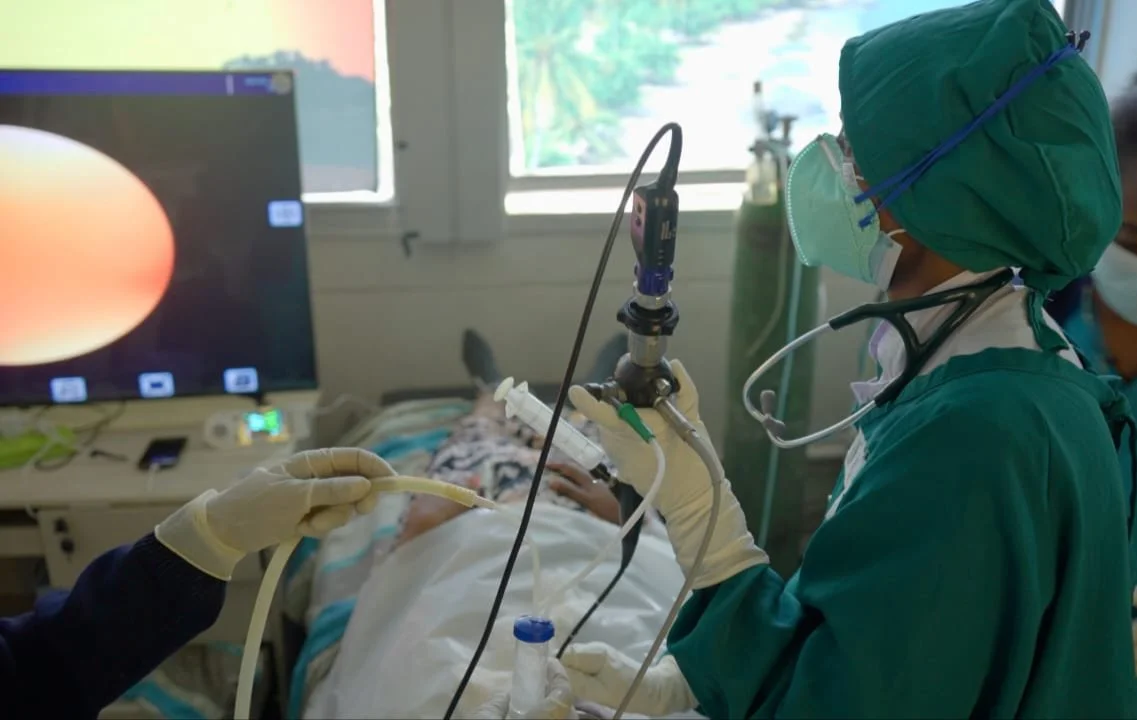
Support the Upcoming Bronchoscopy and Pleural Procedure Training in Ethiopia (November 2026 – March 2027)
Help fund hands-on workshops, simulation-based training, essential equipment, and educational supplies to strengthen bronchoscopy and pleural procedure skills among Ethiopian physicians.
Support the Development of a Future Interventional Pulmonology Fellowship Program in Ethiopia
Help establish a sustainable, locally led interventional pulmonology training program that will equip future generations of Ethiopian pulmonologists with advanced procedural skills.
Train One. Impact Thousands.